
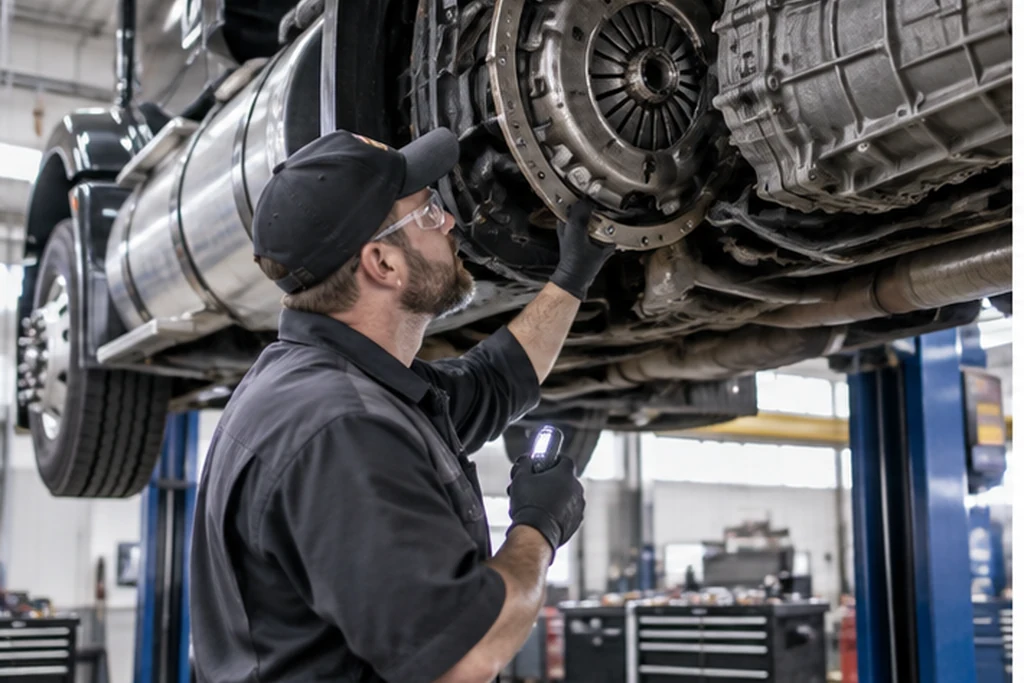
A heavy-duty truck clutch transfers engine torque to the transmission and disconnects that power when the driver needs to start, stop, or select a gear. It operates under enormous pressure and heat, particularly when a loaded tractor-trailer starts on a grade, backs into a dock, or moves repeatedly through congested traffic.
Clutches are wear components, but they rarely fail without warning. The first signs may include a changing pedal feel, difficulty engaging a gear, engine speed rising without matching acceleration, vibration during takeoff, or a burning smell after a difficult maneuver.
Recognizing these symptoms early matters. A clutch problem that begins as an adjustment or linkage issue may eventually damage the pressure plate, flywheel, input shaft, release system, or transmission. If the clutch fails completely, the driver may be unable to move the truck or disconnect engine power safely.
Not every shifting problem means that the clutch itself is worn out. Similar symptoms can come from the clutch brake, linkage, hydraulic system, transmission, driveline, engine mounts, or incorrect operating technique. The truck needs a complete diagnosis before expensive parts are replaced.
How a Semi-Truck Clutch Works
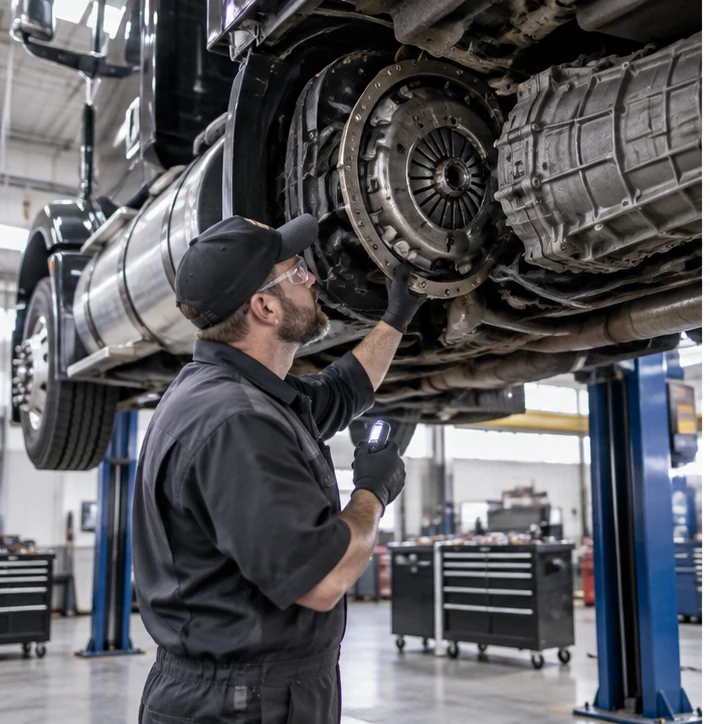
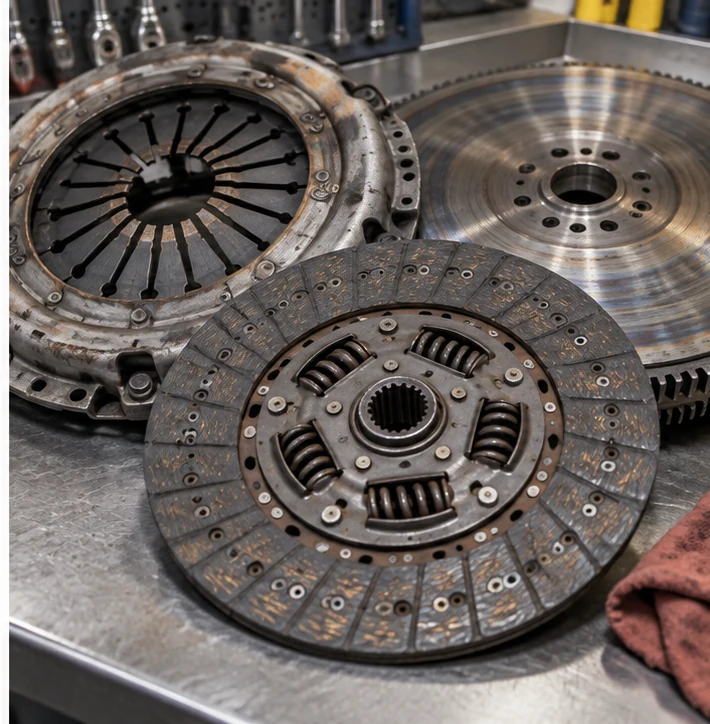
In a traditional manual-transmission semi-truck, the clutch assembly is mounted between the engine and transmission. Its primary components include driven discs, a pressure plate, intermediate plate, clutch cover, release bearing, and related linkage.
When the clutch is engaged, the pressure plate holds the friction discs against the flywheel. Engine torque passes through the clutch and into the transmission. When the driver presses the pedal, the release mechanism reduces that clamping force, allowing the engine and transmission to rotate independently.
Many heavy-duty clutches use two driven discs because the assembly must handle far more torque than a typical passenger-car clutch. A clutch brake is also used on many manual trucks. It helps stop the transmission input shaft when the vehicle is stationary so the driver can select an initial gear without excessive grinding.
Automated manual transmissions, commonly called AMTs, also use a mechanical clutch. Instead of a clutch pedal, an electronic control system and actuator manage clutch engagement. An AMT clutch can experience wear, overheating, contamination, or release problems even though the driver does not operate it directly.
Clutch design and adjustment procedures vary significantly. The manufacturer’s instructions for the exact clutch, transmission, linkage, and truck model must be followed during inspection and service.
The Engine Revs but the Truck Does Not Accelerate Normally
Clutch slippage is one of the most recognizable signs of a worn or damaged clutch. The engine speed rises, but the truck does not accelerate in proportion to that increase. It may feel as if some of the engine’s power is disappearing before it reaches the drive wheels.
Slippage is often most noticeable under high torque. A loaded truck may perform normally on level ground but begin slipping while climbing a grade, accelerating onto the highway, or pulling away in a higher gear. The problem can initially appear for only a few seconds and then become more frequent.
Worn friction material is a common cause, but it is not the only possibility. Incorrect adjustment, insufficient clamping force, oil contamination, heat damage, or problems within the release system can prevent the clutch from holding properly.
A slipping clutch generates heat extremely quickly. Eaton’s Clutch Failure Analysis Guide explains that slipping produces heat faster than the clutch can dissipate it. Continuing to apply throttle can damage the discs, pressure plate, intermediate plate, and flywheel.
Drivers should not deliberately test for slippage by repeatedly loading the clutch. If engine speed increases without normal acceleration, report the condition and have the truck inspected.
The Truck Shudders When Starting From a Stop
A healthy clutch should engage progressively and move the truck without severe shaking. If the tractor shudders, hops, or vibrates as the clutch takes hold, the condition is often called clutch chatter.
Chatter can be caused by warped or heat-damaged friction surfaces, contaminated clutch discs, damaged dampener springs, incorrect installation, worn pilot components, or uneven engagement. Problems outside the clutch can produce a similar sensation. Worn engine mounts, transmission mounts, driveline joints, or suspension components may allow excessive movement when torque is applied.
The driver’s technique and operating conditions also matter. Starting in the wrong gear, using too little engine speed, or attempting to move an unusually heavy load can create vibration even when the clutch is functional. A consistent shudder during normal starts is more concerning than a single rough takeoff.
Notice whether the vibration occurs only when the truck is cold, after the drivetrain becomes hot, when backing, or when starting on a grade. This information can help a technician reproduce the symptom.
Repeated clutch chatter should not be ignored. The vibration places additional stress on mounts, driveline parts, clutch components, and the transmission.
Shifting Becomes Difficult or Produces Grinding
Difficulty selecting a gear may mean that the clutch is not releasing completely. This condition is commonly called clutch drag. Even with the pedal depressed, the clutch continues transferring some torque to the transmission input shaft.
A truck with clutch drag may grind when the driver selects first gear or reverse while stopped. It may resist going into gear, attempt to move with the pedal down, or require excessive force at the shift lever.
Possible causes include incorrect adjustment, a worn release mechanism, damaged linkage, a hydraulic-system problem, distorted clutch discs, worn input-shaft splines, or internal clutch damage. Eaton’s heavy-duty clutch installation guide notes that worn input-shaft splines can prevent the driven discs from sliding freely and contribute to poor clutch release.
Grinding during upshifts or downshifts does not automatically prove that the clutch is defective. Many Class 8 manual transmissions are not synchronized in the same way as passenger-car transmissions. Incorrect engine-speed matching, rushed shifts, transmission wear, or driver technique can cause gear clash.
The FMCSA CDL Manual directs drivers to use their state manual for the correct commercial-vehicle inspection and operating procedures. A driver who notices a new change in shifting behavior should report it instead of compensating with more force.
The Clutch Pedal Feels Different
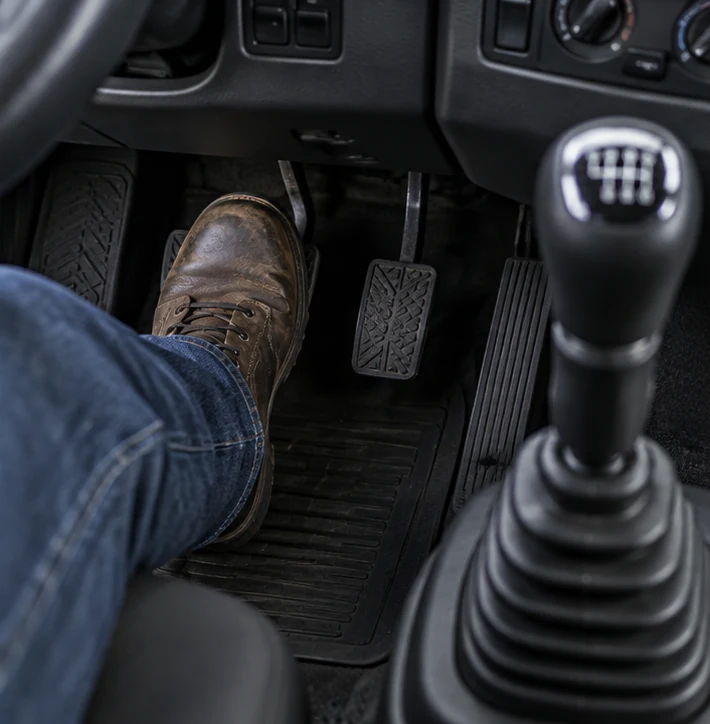
Drivers become familiar with the normal resistance, travel, and engagement point of the clutch pedal. A sudden or gradual change can be an early sign of a problem.
The pedal may become unusually hard to press, feel soft, stick partway through its travel, or fail to return normally. The clutch may begin engaging close to the floor or near the top of the pedal’s travel. Free pedal may increase, decrease, or disappear.
These changes can be caused by clutch wear, incorrect adjustment, worn cross-shaft bushings, damaged linkage, a binding release mechanism, or problems in a hydraulic clutch-control system. A hydraulic system may develop a leak, allow air to enter, or suffer a master- or slave-cylinder failure.
A self-adjusting clutch does not eliminate the need for inspection. If the adjustment mechanism cannot compensate correctly, or if another part of the release system is worn, the driver may still experience abnormal pedal behavior.
Do not adjust the linkage simply to restore a familiar pedal position without determining why it changed. An incorrect adjustment can prevent complete engagement or release, increase clutch wear, and damage the clutch brake.
You Hear Squealing, Rattling, or Grinding Near the Clutch Housing
A failing clutch or release system can produce several different sounds. The timing of the noise is often more useful than the sound alone.
A squeal that begins when the pedal is pressed may involve the release bearing, linkage, or another component that starts moving under pedal pressure. A rattle at idle may come from clutch dampener components, the transmission, driveline, or engine rather than the clutch itself.
Grinding near the bottom of the pedal’s travel can involve the clutch brake, especially if it occurs while the truck is stationary and the driver is attempting to select a starting gear. However, improper pedal use can also damage the clutch brake. On many manual trucks, it is intended to operate only when the vehicle is stopped and the pedal is pressed near the end of its travel.
Noise that occurs with the pedal released may point to a different component than noise that appears only with the pedal depressed. Tell the technician exactly when the sound begins, whether the transmission is in neutral, and whether the truck is moving.
Lubrication requirements depend on the clutch design. Eaton provides specific guidance on release-bearing lubrication because incorrect or neglected lubrication can contribute to wear. Adding excessive grease or using the wrong product can also cause problems, so the proper service procedure should be followed.
There Is a Burning Smell After Normal Operation
A hot clutch often produces a sharp, unpleasant odor similar to overheated brakes or burning friction material. The smell may first appear after backing into a difficult dock, starting on a steep grade, or moving slowly through heavy traffic.
Some heat is expected during clutch engagement because the engine and transmission are briefly rotating at different speeds. Excessive slipping keeps the friction surfaces in partial contact for too long, creating far more heat than the assembly can safely absorb.
A burning smell after an unusually difficult maneuver does not automatically mean that the clutch requires replacement. However, the truck should be allowed to cool according to company procedures, and the driver should monitor for continued slippage or changes in engagement.
If the smell appears during ordinary starts or highway operation, the clutch may be slipping without deliberate pedal input. Incorrect adjustment, a driver resting a foot on the pedal, a binding release mechanism, or worn friction material could keep the clutch partially released.
Smoke, severe vibration, loss of power transfer, or a strong burning smell requires immediate attention. Excessive heat can damage metal components and create a risk of serious mechanical failure.
The Truck Moves With the Clutch Pedal Fully Depressed
When a manual-transmission truck attempts to creep forward with the pedal fully depressed, the clutch may not be releasing completely. The same underlying condition may cause the engine to load down, the transmission to resist gear selection, or the truck to lurch when a gear is engaged.
The cause may be clutch drag, but the technician should inspect the complete release system. Linkage travel, hydraulic operation, clutch adjustment, release-bearing position, input-shaft condition, and disc movement can all affect disengagement.
The driver should not hold the truck in place by partially engaging the clutch against engine power. Use the service brake according to normal operating procedures. Continuing to force the transmission into gear can damage transmission components and create an unexpected vehicle movement.
If the truck cannot be safely controlled with the clutch pedal depressed, remove it from service and request professional assistance.
The Clutch Slips More When the Truck Is Loaded
Early clutch wear is often easiest to detect with a heavy trailer. The clutch may hold during bobtail operation but slip once the truck is loaded. Starting on a hill or accelerating in a high-torque situation can expose reduced clamping capacity.
This does not mean that drivers should deliberately overload or abuse the clutch to confirm a problem. Instead, compare the truck’s performance during normal, legal operation. If the same route and similar load now produce engine flare, slower acceleration, or a burning smell, report the change.
A clutch that slips only when hot may have marginal capacity. As temperature increases, damaged friction surfaces or weakened internal parts may become less effective. The truck may seem normal again after cooling, but the problem is likely to return.
Load-related symptoms can also come from the engine or fuel system. A truck that loses engine power will not necessarily show the same rise in RPM associated with clutch slippage. Accurate observation helps distinguish a power-production problem from a power-transfer problem.
The Engagement Point Keeps Changing
A clutch normally wears gradually, and some designs compensate for that wear through adjustment. If the engagement point moves noticeably over a short period, something may be changing faster than expected.
Loss of free pedal, repeated need for adjustment, or an inconsistent engagement point can indicate accelerated clutch wear, linkage problems, a defective self-adjusting mechanism, or hydraulic trouble. A repair that restores the pedal temporarily but does not correct the underlying cause may need to be repeated.
Eaton’s discussion of hydraulic clutch linkage explains why matching the clutch type and adjustment requirements to the linkage is important. Different systems do not respond to wear in exactly the same way.
Drivers should record when the change began and whether it followed clutch service, transmission removal, or another repair. Incorrect installation or adjustment can produce symptoms soon after the truck returns to service.
The Truck Will Not Move Even Though a Gear Is Selected
A complete loss of movement is one of the most serious clutch-related symptoms. The engine may run normally and the transmission may appear to enter gear, but little or no torque reaches the drive wheels.
A severely damaged clutch can cause this condition, but so can a failed driveline component, axle problem, transmission failure, or axle-shaft damage. The truck requires inspection before anyone concludes that the clutch is responsible.
Do not continue revving the engine in an attempt to make the truck move. If the clutch is slipping, additional throttle generates more heat and may destroy parts that were still repairable.
Activate the hazard lights, secure the truck, and contact dispatch or roadside assistance. If the failure occurs in traffic, prioritize personal and roadway safety before attempting to document the symptoms.
Signs of Clutch Trouble in an Automated Manual Transmission
An AMT does not provide pedal feedback, so the warning signs can be different. Drivers may notice delayed engagement, harsh takeoffs, repeated hesitation, unexpected neutral conditions, warning messages, fault codes, or difficulty moving from a stop.
The transmission controller uses information from multiple sensors to operate the clutch actuator. A problem with a sensor, actuator, wiring circuit, software calibration, air supply, or transmission can imitate clutch failure.
Some AMT systems require a clutch calibration or relearn procedure after components are replaced. If the procedure is incomplete, the new clutch may engage poorly even though its friction material is in good condition.
Do not attempt to diagnose an AMT by comparing it directly with a pedal-operated manual clutch. Record the dashboard warning, operating temperature, load, road grade, and exact conditions under which the problem occurs. A technician can then review fault codes and manufacturer-specific diagnostic information.
What Causes a Semi-Truck Clutch to Fail Early?
Excessive heat is one of the greatest threats to clutch life. Long periods of partial engagement create heat that cannot escape quickly enough. Backing uphill, holding the truck on a grade with the clutch, starting in too high a gear, or repeatedly riding the pedal can accelerate wear.
Improper adjustment and neglected lubrication can also shorten clutch life. If the clutch cannot engage fully, it may slip. If it cannot release fully, it may drag and make shifting difficult.
Oil contamination from an engine rear-main seal or transmission input area may reduce friction between the discs and flywheel. Misalignment, worn flywheel surfaces, damaged transmission components, and incorrect clutch selection can produce repeated failures even after the friction discs are replaced.
The operating application matters as well. A truck that performs frequent starts, heavy hauling, construction work, or urban deliveries places different demands on the clutch than a highway tractor that spends most of its time at steady speed.
What Should You Do When Clutch Symptoms Appear?
Report the problem as soon as you notice a consistent change. Describe whether the clutch slips, drags, chatters, smells hot, makes noise, or has an unusual pedal feel. Include the load, road grade, temperature, selected gear, and whether the symptom occurs when the truck is cold or hot.
If the clutch slips severely, produces smoke, will not disengage, or prevents the truck from moving safely, stop in a safe location and request assistance. Continuing to drive may damage the flywheel, transmission, or other driveline components.
Drivers should not remove clutch inspection covers, work beneath an unsecured truck, or attempt internal adjustments without the correct training and equipment. A heavy-duty clutch assembly can weigh approximately 150 pounds, and internal components operate under substantial spring force.
The safest diagnosis comes from examining the complete system rather than replacing the clutch based on a single symptom.
How to Extend Semi-Truck Clutch Life
Good operating habits can significantly reduce clutch wear. Start in the correct gear for the load and grade, and complete the engagement smoothly without remaining in the slipping zone longer than necessary.
Use the service brakes to hold the truck on a hill. Do not balance the truck by partially engaging the clutch. Avoid resting your foot on the pedal because even light pressure may load the release system or reduce clamping force.
When backing, plan the maneuver before moving. Stop and reposition if necessary instead of using extended clutch slippage to control speed. Follow the manufacturer’s procedures for manual or automated transmissions.
Regular maintenance is equally important. Clutch adjustment, linkage inspection, hydraulic-system checks, lubrication, and flywheel measurements should follow the manufacturer’s specifications. Correcting leaks and worn external components early can prevent damage to the clutch assembly.
Frequently Asked Questions
How Long Does a Semi-Truck Clutch Last?
There is no universal mileage. Clutch life depends on vehicle weight, route, driver technique, transmission type, maintenance, adjustment, and how frequently the truck starts, stops, or backs. Highway use generally creates less clutch wear than repeated urban or vocational operation.
Can a Bad Clutch Damage the Transmission?
Yes. Clutch drag can make gears difficult to engage and place additional stress on transmission components. Severe slippage creates heat, while clutch chatter can send vibration through the drivetrain.
Does a Burning Smell Always Mean the Clutch Is Bad?
No. Brakes, electrical components, leaking fluids, and other systems can create burning odors. A clutch-related smell is more likely when it follows prolonged slipping and appears with changes in engagement or acceleration.
Can a Semi-Truck Clutch Be Adjusted Instead of Replaced?
Sometimes. Certain symptoms may result from incorrect adjustment, worn linkage, or a hydraulic problem. Adjustment will not restore friction material or repair heat-damaged, contaminated, warped, or broken clutch components.
Why Does My Clutch Grind Only When Selecting First or Reverse?
The clutch may be dragging, the clutch brake may be worn or incorrectly adjusted, or the pedal may not be operated correctly. The release system and transmission input-shaft movement should be inspected before parts are replaced.
Final Thoughts
The most common signs of a bad semi-truck clutch include slippage, difficult gear engagement, clutch chatter, changing pedal feel, unusual noise, a burning smell, and incomplete disengagement. In severe cases, the truck may not move even though the transmission is in gear.
These symptoms do not always mean that the entire clutch assembly has failed. Linkage, hydraulic controls, adjustment, the clutch brake, transmission parts, engine mounts, and driver technique can create similar problems.
Pay attention to when and how the symptom occurs, report it accurately, and arrange a professional inspection before the truck becomes unsafe or stranded. Early diagnosis may prevent a smaller clutch-control problem from turning into a complete clutch, flywheel, or transmission repair.
