
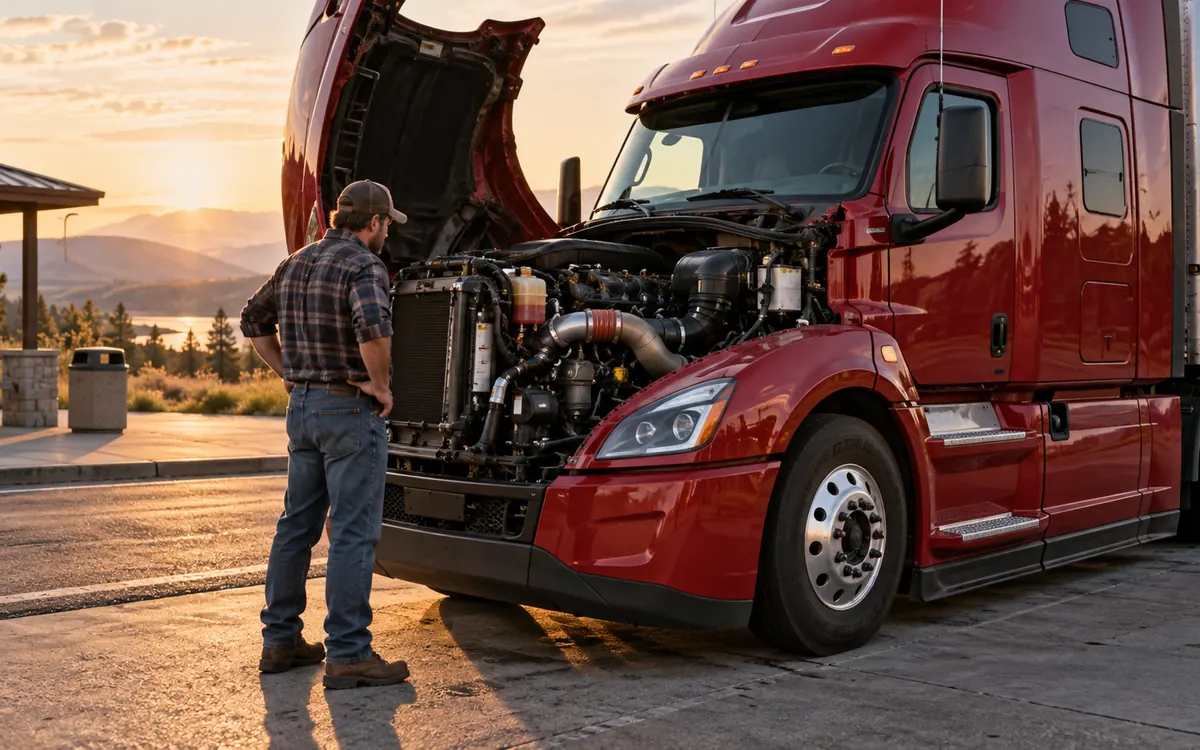
A temperature-related message can create two simultaneous questions. The driver needs to follow the vehicle's instructions for the immediate condition, and the maintenance team needs a useful account of what happened. Keeping those questions connected helps the carrier respond appropriately. A clear report identifies the unit, preserves the exact message and describes the operating circumstances without asking the driver to diagnose a cooling system or improvise a repair beside the road.
Follow the vehicle's immediate instructions
Use the manufacturer's instructions and the carrier's procedures for the warning or condition observed. Different messages can require different responses, so do not treat a remembered response from another truck as universal guidance. If the instruction is unclear, contact the responsible support team through the approved process.
Safety takes priority over collecting a detailed record. Once in an appropriate situation, note the message and what action was taken. Do not delay the required response to obtain a photograph or copy a display. The report should support the operating decision, not become another task competing with it.
Capture the wording accurately
Write the exact message or code when it can be obtained safely and through the approved method. A general description such as engine hot may lose a distinction the technician needs. If the carrier permits an image of the display while parked, keep it attached to the correct vehicle report.
Also record whether the message remained present, appeared intermittently or changed after the action directed by the vehicle instructions. Describe the sequence without adding a conclusion about the cause. The workshop can decide what diagnostic work is appropriate, using the message together with the unit's history and its own examination.
Describe the circumstances that preceded it
Useful context can include the stage of the trip, whether the vehicle was moving or parked and any relevant condition directly observed. Keep the description factual. A route with a long climb, a period of low-speed yard work or a recently completed service may each be worth mentioning without asserting that it caused the warning.

Use a short timeline rather than a long narrative. In a fictional case, the driver notices a message after entering a queue, follows the prescribed response and contacts maintenance. Those events give the service team a sequence to investigate. Guessing that a component must have failed can narrow the conversation prematurely.
Keep checks within training and instructions
Only perform checks authorized by the manufacturer and carrier for the situation. Cooling systems can involve hot components and pressure. Do not open or alter components on the strength of a general internet explanation. Qualified maintenance personnel should direct the appropriate examination and work.
The Freightliner driver-training resources is one example of manufacturer material available for relevant vehicles. Obtain the correct manual for the actual truck and configuration. A web page for a different model may help identify what to ask, but it should not replace the instructions that apply to the unit.
Give maintenance the complete vehicle identity
Provide the fleet unit and any other identifier requested by the service process. Include the open report reference if another shift has already discussed the concern. A workshop dealing with several similar tractors needs to know which history belongs to the arriving vehicle.
If the carrier moves the load to another truck, maintain separate records for the repair and the freight movement. The replacement vehicle's availability does not close the original concern. Connect the substitution in dispatch while allowing maintenance to retain the full sequence on the truck that generated the message.
Ask for the next decision point
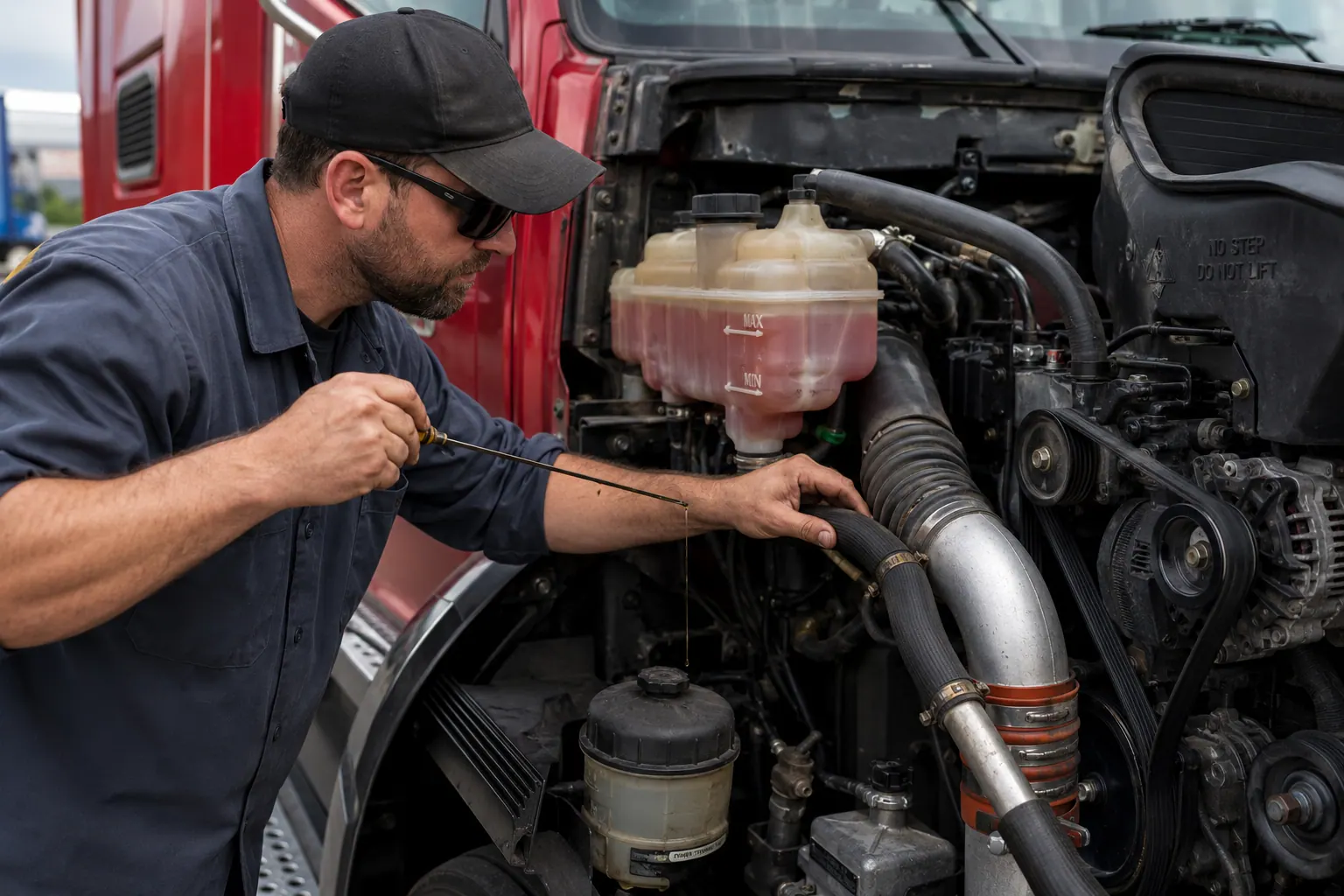
Dispatch benefits from a confirmed status and an agreed update point. A workshop may first need to investigate, then obtain approval or parts before it can estimate completion. Keep those stages distinct. A scheduled diagnostic visit is not a promised release time, even when the truck is already on the premises.
The FMCSA Motor Carrier Safety Planner gives broader context for inspection and maintenance responsibilities. Apply the fleet's actual process for determining readiness. The report should make it clear who will provide the next authorized answer so another dispatcher does not mistake silence for completion.
Connect the findings to the next shift
When the service team provides findings, completed work or follow-up instructions, retain them with the original report. A later driver should be able to identify the vehicle's current authorized status and any instruction relevant to its next assignment. Avoid relying on a verbal explanation that disappears when the first dispatcher leaves.
Review whether the initial report contained the details the technician needed. Perhaps the exact message was useful but the vehicle location was missing, or the sequence became clearer only after several calls. Improve that part of the reporting process. A good cooling-system report does not need a confident diagnosis. It needs accurate observations, the correct vehicle and a clear connection to qualified maintenance decisions.
## Preserve the original observation in the message chain
As the discussion moves from driver to dispatcher to workshop, retain the initial observation and reference. A summary should help the technician locate the event rather than replace it with an increasingly confident interpretation. Check which attachment the receiving team can actually access. If later assessment changes the working explanation, keep the distinction visible. The workshop's finding belongs with its completed work, while the driver's report records what was observed. That history remains useful if a concern returns, and it avoids allowing a preliminary guess to become the apparent diagnosis through repeated forwarding.
