
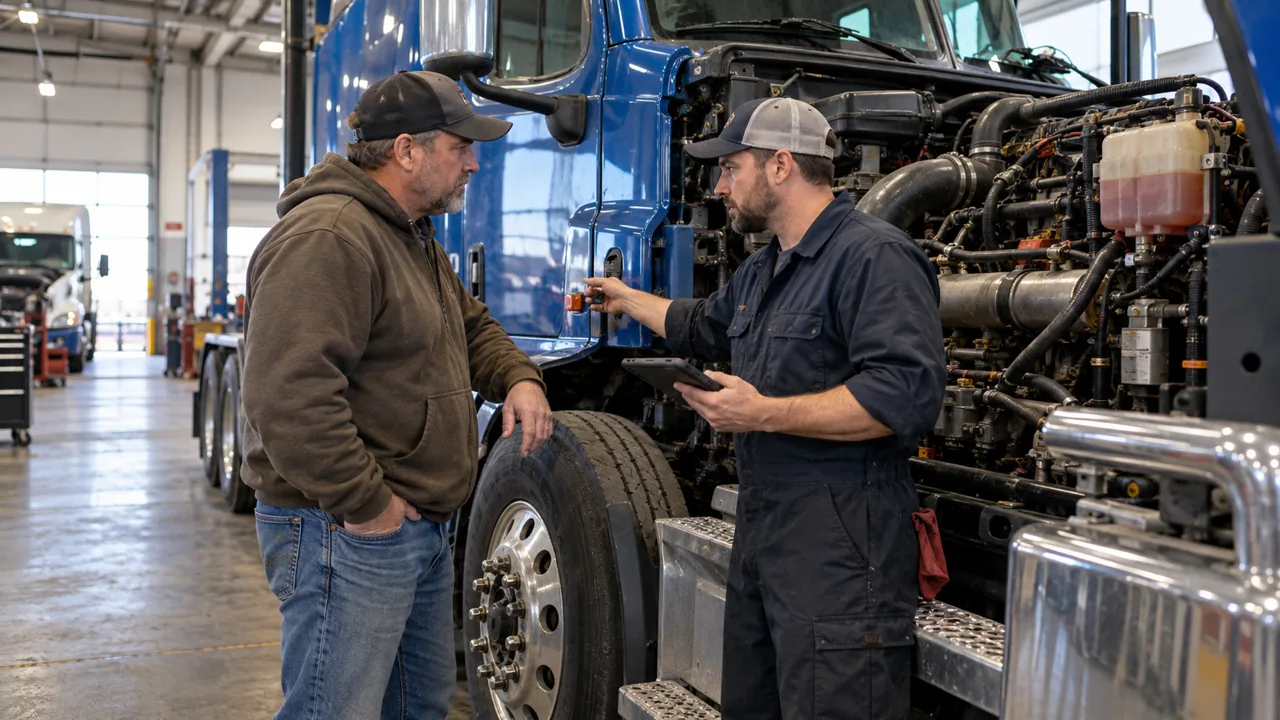
A slow start after a break can create pressure to get the truck running and deal with the cause later. That approach may work once and still leave the driver with the same problem at a less convenient stop. Starting trouble is more useful as a reportable pattern than as a reason for repeated improvised attempts. A sensible driver routine records what happened, checks only what can be observed safely, and gives maintenance the information needed to distinguish batteries, charging, wiring, starter operation, and other possible causes.
Describe the start rather than naming the failed part
Tell maintenance whether the engine cranked slowly, did not crank, clicked, started normally and then displayed a warning, or behaved in another specific way. Mention the conditions before the attempt: length of the stop, weather, accessory use, and whether the problem has occurred recently. Those observations help without pretending to diagnose the system. A truck that does not start does not automatically need new batteries, and a successful later attempt does not prove that the original issue has disappeared.
Keep the report connected to the correct unit and time. If the dashboard showed a message, record the wording from a safely parked position. Describe a change in interior lighting or other electrical behavior only as something observed, not as a test result. Avoid repeatedly operating the starter while searching online for an answer. Follow the vehicle's specified starting procedure and limits, then obtain appropriate assistance if the truck does not behave normally. The driver should not have to invent a mechanical decision under delivery pressure.
Use the manual for the truck in front of you
Heavy trucks differ in battery arrangements, accessory circuits, battery-management features, and approved starting assistance. Learn the relevant controls during orientation and keep the correct driver handbook available. The Freightliner New Cascadia driver's manual is an example of manufacturer instructions that include vehicle-specific inspection guidance. It is not a substitute for another truck's manual or for instructions matched to a particular fleet installation.
Ask where the approved inspection points and starting-assistance connections are, and which actions the carrier authorizes drivers to perform. Do not assume that a familiar-looking battery box means the system is wired like a passenger car. Different vehicle configurations and added equipment can change the arrangement. A brief orientation before departure avoids a much more difficult discussion after a flat battery. It also establishes whom to contact when an attempted start or dashboard message does not match the normal procedure.
Notice accessible condition without undertaking repairs
Through the approved walkaround procedure, look for obvious damage, loose securing arrangements, or visible cable problems in accessible areas. Do not open sealed batteries, place metal tools across terminals, improvise cable connections, or work near damaged electrical equipment. Keep the vehicle secure and leave diagnosis to qualified personnel. If a battery appears damaged, leaking, swollen, unusually hot, or otherwise unsafe, keep clear and request assistance rather than trying to recover the schedule by making another connection.
The practical value of a visual observation is that it can direct the maintenance response. A clear description of a damaged cable or insecure cover is more useful than saying everything looks old. Take a photograph only from a safe position if the carrier requests it. Do not remove guards or enter an unsafe space to obtain a better picture. Record what is visible and explain what has not been checked. That distinction helps the technician understand the limits of the report.
Keep track of what stays powered during breaks
Cab appliances, lights, chargers, and other equipment can create a load while the engine is off. Learn which outlets remain powered and how the truck's battery-management system is intended to behave. Do not defeat a shutdown feature to keep an accessory running. If a normal rest routine repeatedly leaves the truck difficult to start, discuss the arrangement with maintenance. The answer may involve equipment compatibility, usage, charging, or a fault rather than simply telling the driver to stop using everything in the cab.
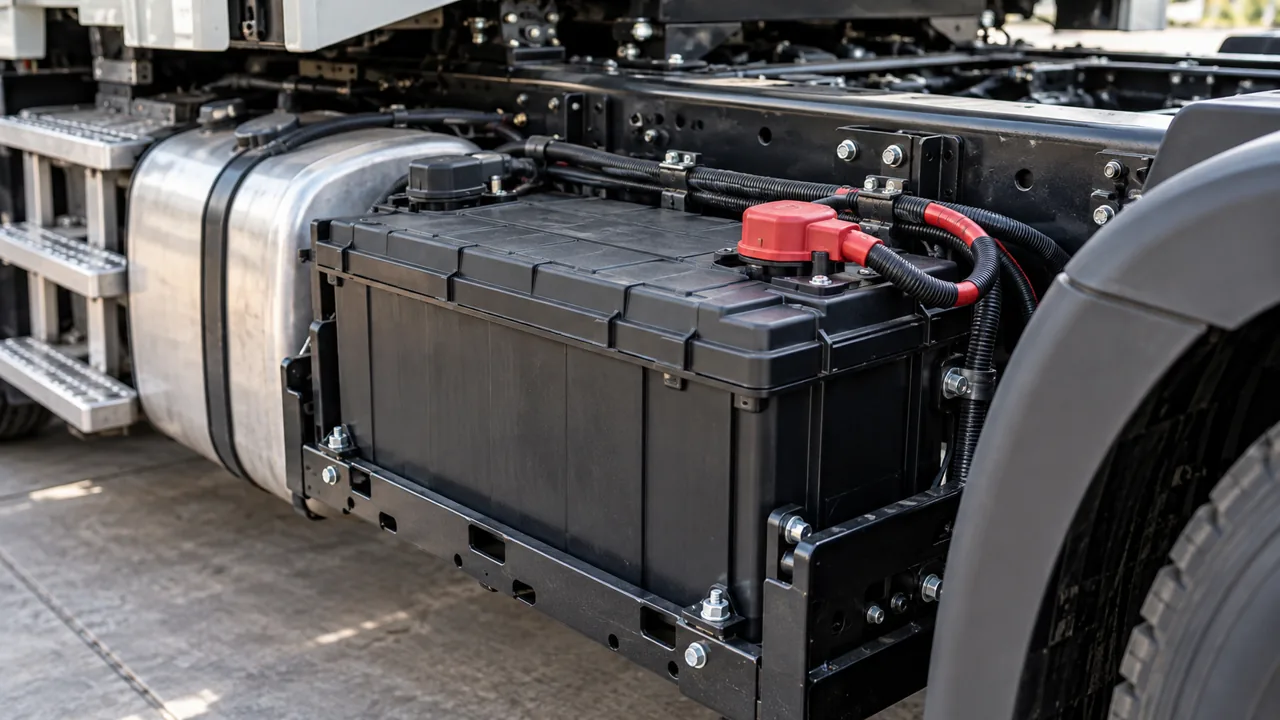
The Freightliner Cascadia driver's manual illustrates how accessory loads and power-management behavior can depend on the vehicle's configuration. Use that principle when asking about your own truck: which devices are approved, how are they supplied, and what should happen during an extended stop? A phone charger and a larger appliance are not interchangeable loads. Have added equipment installed and reviewed through the appropriate qualified process.
Do not turn a warning into a guessing game
A battery or charging-system indication may involve more than the battery itself. Read the exact vehicle instruction and report the message. Avoid deciding that a particular warning can be ignored because the engine is still running. The truck's electrical system supports equipment needed for safe operation, and the appropriate response depends on the actual fault. If performance or required equipment is affected, follow the carrier's procedure for stopping and obtaining a maintenance decision.
Likewise, do not treat an apparent voltage reading as a complete diagnosis. The interpretation depends on operating conditions, system design, and the measurement method. A number seen briefly on a display cannot establish the health of every battery in a bank or identify a charging fault. Qualified testing can evaluate the system under the appropriate conditions. The driver's useful contribution is the history: when starting changed, what was operating, what warnings appeared, and whether the issue recurred after an authorized repair.
Arrange starting assistance through the approved process
If the truck needs external starting assistance, contact the carrier or a qualified service provider and follow the instructions for the actual vehicle. Do not connect cables or a booster based on a remembered passenger-car sequence. Incorrect polarity, incompatible equipment, or an unsuitable connection can cause serious damage and injury. Keep smoking, sparks, and other ignition sources away from the work area. A service professional should assess damaged or suspect batteries before attempting assistance.
Tell the provider where the truck is parked and whether the site offers safe access. A cramped loading lane or highway shoulder can make a simple service job much more difficult. Coordinate with the facility or appropriate assistance rather than standing in traffic to guide a technician informally. Once the engine starts, obtain the next maintenance instruction instead of assuming the problem is resolved. Starting the truck addresses the immediate interruption; it does not necessarily explain why the system failed to start normally.
Look for recurrence after the repair
Keep the outcome in the defect and service record, including what qualified maintenance confirmed and any operating instruction provided. If the symptom returns, connect the new report to that history. Repeatedly recording a flat battery as an isolated event can hide a pattern involving accessory use, charging, connections, or equipment condition. Give the next driver enough information to recognize the relevant concern without presenting an unsupported theory as the established cause.
A reliable starting routine is built on observation, correct instructions, and a completed maintenance process. It does not require the driver to become an electrical specialist or carry out risky roadside experiments. Report the behavior clearly, respect the system's power-management features, and obtain qualified help when the truck does not start normally. That approach protects the equipment and gives the next departure a better foundation than another hurried attempt followed by a hope that the same problem will not return.
